Domain rnbs.de kaufen?
Wir ziehen mit dem Projekt
rnbs.de um.
Sind Sie am Kauf der Domain
rnbs.de interessiert?
domain@kv-gmbh.de · 0541-91531010
Domain rnbs.de kaufen?
Was ist der Unterschied zwischen Rhythmus, Melodie und Harmonie?
Rhythmus bezieht sich auf die zeitliche Organisation von Klängen und betont die regelmäßige Abfolge von betonten und unbetonten Noten. Melodie bezieht sich auf die Abfolge von Tönen, die eine musikalische Linie bilden und eine bestimmte Tonhöhe haben. Harmonie bezieht sich auf die vertikale Anordnung von Tönen und beschreibt, wie sie zusammenklingen und welche Akkorde oder Harmonien gebildet werden. **
Hast du kein Gefühl für Takt, Rhythmus und Musik?
Als KI habe ich keine Gefühle, daher kann ich keinen persönlichen Geschmack oder ein Gefühl für Takt, Rhythmus und Musik haben. Ich kann jedoch Informationen über diese Themen liefern und analysieren. **


Ähnliche Suchbegriffe für Modernization
Top-Angebote
Produkte zum Begriff Modernization:
-
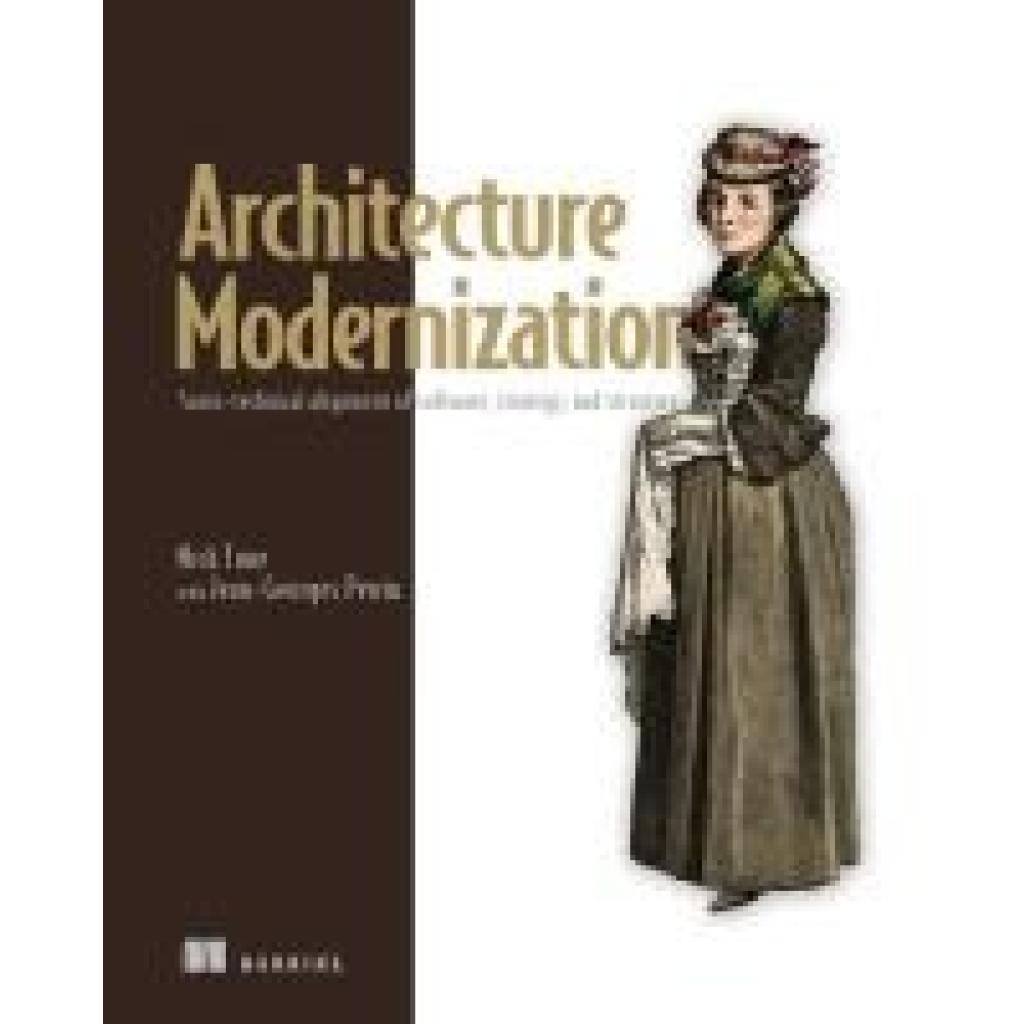
Tune, Nick: Architecture ModernizationArchitecture Modernization , Proven techniques and principles for modernizing legacy systems into new architectures that deliver serious competitive advantage. For a business to thrive, it needs a modern software architecture that is aligned with its corporate architecture. This book presents concrete practices that sync software, product, strategy, team dynamics, and work practices. You’ll evolve your technical and social architecture together, reducing needless dependencies and achieving faster flow of innovation across your organization. In Architecture Modernization: Socio-technical alignment of software, strategy, and structure you’ll learn how to: Identify strategic ambitions and challenges using listening and mapping tours Visualize your business landscape and crucial capabilities with Wardley Mapping Create a product taxonomy as a framework for your architecture Run big picture EventStorming workshops to map business domains Apply Team Topologies patterns to identify and refine value streams Design loosely coupled, domain-aligned software architectures Build internal developer platforms for rapid, reliable evolution Implement data mesh principles and tools to revolutionize data engineering Deliver compelling modernization roadmaps focused on continuous value Architecture Modernization: Socio-technical alignment of software, strategy, and structure shows you how to turn the practice of architecting systems into a transformative process for your entire company. Chapter-by-chapter, you’ll identify the reasons and benefits of modernization, design an architecture that works for your business, and then implement your new approach in a progressive and sustainable manner. Every technique is illustrated with insightful industry examples and an interactive Miro board that lets you dig deeper. Forewords by Matthew Skelton and Xin Yao. Purchase of the print book includes a free eBook in PDF, Kindle, and ePub formats from Manning Publications. About the technology The decisions you make about your software are inherently connected to the decisions you make about your business. Why not turn the mundane task of modernizing legacy systems into a transformative process for your entire company? This book shows you how! It reveals a socio-technical approach to align your software and products with organizational dynamics and ways of working. About the book Architecture Modernization: Socio-technical alignment of software, strategy, and structure presents a clear path for upgrading your entire organization when you re-imagine your software. In it, you’ll learn to combine practices like Domain-Driven Design, Event Storming, and Wardley Mapping to discover user needs, design optimal architecture, and avoid falling back into old habits. Provocative examples from Danske, Salesforce, the UK Government, and others show the real-world result of each approach, identifying techniques you can apply effectively in your own business. What's inside Uncover cross-org challenges and opportunities A product-centric approach to architecture Envision architecture as a portfolio to prioritize investment About the reader For CTOs, tech leads, and principal engineers who decide on architecture and organization design. About the author Nick Tune helps organizations modernize their architectures through empowered product teams and continuous delivery. Jean-Georges Perrin builds innovative and modern data platforms. The technical editor on this book was Kamil Nicieja. Table of Contents 1 What is architecture modernization? 2 Preparing for the journey 3 Business objectives 4 Listening and mapping tours 5 Wardley Mapping 6 Product taxonomy 7 Big picture EventStorming 8 Product and domain modernization 9 Identifying domains and subdomains 10 Strategic IT portfolio 11 Team Topologies 12 Loosely coupled software architecture 13 Internal developer platforms 14 Data mesh revolutionizing data engineering 15 Architecture modernization enabling teams 16 Strategy and roadmaps 17 Learning and upskilling , > , Erscheinungsjahr: 20240220, Autoren: Tune, Nick~Perrin, Jean-Georges, Seitenzahl/Blattzahl: 488, Themenüberschrift: COMPUTERS / Enterprise Applications / General, Keyword: Event Storming; Team Topologies; and Domain-Driven Design; product development techniques; software architecture; business strategy, Fachschema: Datenverarbeitung / Anwendungen / Betrieb, Verwaltung~Informatik, Fachkategorie: Informatik, Warengruppe: HC/Informatik, UNSPSC: 49019900, Warenverzeichnis für die Außenhandelsstatistik: 49019900, Länge: 232, Breite: 192, Höhe: 30, Gewicht: 896, Produktform: Kartoniert, Genre: Importe,43,68 €*Versand: 0,00 €Sichere Weiterleitung zum Anbieter


-
Was ist bei der Musik Metrum, Takt und Rhythmus?
Metrum bezieht sich auf die regelmäßige Abfolge von betonten und unbetonten Silben in einem Vers oder einer musikalischen Phrase. Takt ist die grundlegende rhythmische Einheit in der Musik, die durch regelmäßige Betonungen und Unterteilungen gekennzeichnet ist. Rhythmus bezieht sich auf die zeitliche Organisation von Klängen und Stille in der Musik und umfasst die Variationen von Betonungen und Unterteilungen innerhalb eines Takts. **
-
Was sind die traditionellen Percussion-Instrumente, die in der lateinamerikanischen Musik hauptsächlich für Rhythmus und Takt verwendet werden?
Die traditionellen Percussion-Instrumente in der lateinamerikanischen Musik sind Congas, Bongos und Timbales. Sie werden hauptsächlich für Rhythmus und Takt eingesetzt. Diese Instrumente verleihen der Musik ihren charakteristischen Sound und sorgen für eine mitreißende Atmosphäre. **
-
Kann Musik ohne Instrumente, nur mit Gesang, existieren?
Ja, Musik kann ohne Instrumente existieren und nur auf Gesang basieren. A-cappella-Musik ist ein Beispiel dafür, bei dem alle musikalischen Elemente nur mit menschlicher Stimme erzeugt werden. Es gibt auch andere Formen von vokaler Musik, die ohne Instrumente auskommen, wie zum Beispiel Gesangsgruppen oder Chöre. **
-
Wie kann ich den Takt eines Liedes ändern oder den Gesang von der Melodie trennen?
Um den Takt eines Liedes zu ändern, kannst du die Geschwindigkeit oder das Tempo des Liedes anpassen. Dies kann mit Hilfe von Musiksoftware oder Apps erfolgen, die Funktionen zur Tempoänderung bieten. Um den Gesang von der Melodie zu trennen, gibt es spezielle Audio-Editing-Tools, die Stimmisolierung oder Stimmentfernung ermöglichen. Diese Tools verwenden Algorithmen, um den Gesang von der Instrumentalmusik zu trennen. **


Was ist der Unterschied zwischen Takt und Rhythmus in der Musik?
Takt ist die regelmäßige Abfolge von betonten und unbetonten Schlägen, die den musikalischen Puls bestimmen. Rhythmus bezieht sich auf die unterschiedlichen Dauern und Betonungen von Tönen innerhalb eines Taktes. Der Takt gibt die Struktur vor, während der Rhythmus die Vielfalt und Variation innerhalb dieser Struktur darstellt. **
Welche Instrumente und Tonabfolgen erzeugen harmonische Klänge in der Musik?
Instrumente wie Klavier, Gitarre und Streichinstrumente erzeugen harmonische Klänge durch das Spielen von Akkorden. Tonabfolgen wie Dur- und Mollakkorde sowie Quinten und Oktaven tragen ebenfalls zur Harmonie in der Musik bei. Die richtige Kombination von Instrumenten und Tonabfolgen schafft eine angenehme und ausgewogene Klangfülle. **
Top-Angebote
Produkte zum Begriff Modernization:
-
Mathematik der Musik: Harmonie, Rhythmus und Melodie in Zahlen, Taschenbuch von Mina Kumari, Verlag Unser Wissen, 978-620-7-59578-5Mathematik Der Musik: Harmonie, Rhythmus Und Melodie In Zahlen, Taschenbuch Von Mina Kumari, Verlag Unser Wissen, 978-620-7-59578-5, Seitenanzahl: 7243,90 €*Versand: 0,00 €Sichere Weiterleitung zum Anbieter
-
Tune, Nick: Architecture ModernizationArchitecture Modernization , Proven techniques and principles for modernizing legacy systems into new architectures that deliver serious competitive advantage. For a business to thrive, it needs a modern software architecture that is aligned with its corporate architecture. This book presents concrete practices that sync software, product, strategy, team dynamics, and work practices. You’ll evolve your technical and social architecture together, reducing needless dependencies and achieving faster flow of innovation across your organization. In Architecture Modernization: Socio-technical alignment of software, strategy, and structure you’ll learn how to: Identify strategic ambitions and challenges using listening and mapping tours Visualize your business landscape and crucial capabilities with Wardley Mapping Create a product taxonomy as a framework for your architecture Run big picture EventStorming workshops to map business domains Apply Team Topologies patterns to identify and refine value streams Design loosely coupled, domain-aligned software architectures Build internal developer platforms for rapid, reliable evolution Implement data mesh principles and tools to revolutionize data engineering Deliver compelling modernization roadmaps focused on continuous value Architecture Modernization: Socio-technical alignment of software, strategy, and structure shows you how to turn the practice of architecting systems into a transformative process for your entire company. Chapter-by-chapter, you’ll identify the reasons and benefits of modernization, design an architecture that works for your business, and then implement your new approach in a progressive and sustainable manner. Every technique is illustrated with insightful industry examples and an interactive Miro board that lets you dig deeper. Forewords by Matthew Skelton and Xin Yao. Purchase of the print book includes a free eBook in PDF, Kindle, and ePub formats from Manning Publications. About the technology The decisions you make about your software are inherently connected to the decisions you make about your business. Why not turn the mundane task of modernizing legacy systems into a transformative process for your entire company? This book shows you how! It reveals a socio-technical approach to align your software and products with organizational dynamics and ways of working. About the book Architecture Modernization: Socio-technical alignment of software, strategy, and structure presents a clear path for upgrading your entire organization when you re-imagine your software. In it, you’ll learn to combine practices like Domain-Driven Design, Event Storming, and Wardley Mapping to discover user needs, design optimal architecture, and avoid falling back into old habits. Provocative examples from Danske, Salesforce, the UK Government, and others show the real-world result of each approach, identifying techniques you can apply effectively in your own business. What's inside Uncover cross-org challenges and opportunities A product-centric approach to architecture Envision architecture as a portfolio to prioritize investment About the reader For CTOs, tech leads, and principal engineers who decide on architecture and organization design. About the author Nick Tune helps organizations modernize their architectures through empowered product teams and continuous delivery. Jean-Georges Perrin builds innovative and modern data platforms. The technical editor on this book was Kamil Nicieja. Table of Contents 1 What is architecture modernization? 2 Preparing for the journey 3 Business objectives 4 Listening and mapping tours 5 Wardley Mapping 6 Product taxonomy 7 Big picture EventStorming 8 Product and domain modernization 9 Identifying domains and subdomains 10 Strategic IT portfolio 11 Team Topologies 12 Loosely coupled software architecture 13 Internal developer platforms 14 Data mesh revolutionizing data engineering 15 Architecture modernization enabling teams 16 Strategy and roadmaps 17 Learning and upskilling , > , Erscheinungsjahr: 20240220, Autoren: Tune, Nick~Perrin, Jean-Georges, Seitenzahl/Blattzahl: 488, Themenüberschrift: COMPUTERS / Enterprise Applications / General, Keyword: Event Storming; Team Topologies; and Domain-Driven Design; product development techniques; software architecture; business strategy, Fachschema: Datenverarbeitung / Anwendungen / Betrieb, Verwaltung~Informatik, Fachkategorie: Informatik, Warengruppe: HC/Informatik, UNSPSC: 49019900, Warenverzeichnis für die Außenhandelsstatistik: 49019900, Länge: 232, Breite: 192, Höhe: 30, Gewicht: 896, Produktform: Kartoniert, Genre: Importe,43,68 €*Versand: 0,00 €Sichere Weiterleitung zum Anbieter
-
Was ist der Unterschied zwischen Rhythmus, Melodie und Harmonie?
Rhythmus bezieht sich auf die zeitliche Organisation von Klängen und betont die regelmäßige Abfolge von betonten und unbetonten Noten. Melodie bezieht sich auf die Abfolge von Tönen, die eine musikalische Linie bilden und eine bestimmte Tonhöhe haben. Harmonie bezieht sich auf die vertikale Anordnung von Tönen und beschreibt, wie sie zusammenklingen und welche Akkorde oder Harmonien gebildet werden. **
-
Hast du kein Gefühl für Takt, Rhythmus und Musik?
Als KI habe ich keine Gefühle, daher kann ich keinen persönlichen Geschmack oder ein Gefühl für Takt, Rhythmus und Musik haben. Ich kann jedoch Informationen über diese Themen liefern und analysieren. **
-
Was ist bei der Musik Metrum, Takt und Rhythmus?
Metrum bezieht sich auf die regelmäßige Abfolge von betonten und unbetonten Silben in einem Vers oder einer musikalischen Phrase. Takt ist die grundlegende rhythmische Einheit in der Musik, die durch regelmäßige Betonungen und Unterteilungen gekennzeichnet ist. Rhythmus bezieht sich auf die zeitliche Organisation von Klängen und Stille in der Musik und umfasst die Variationen von Betonungen und Unterteilungen innerhalb eines Takts. **
-
Was sind die traditionellen Percussion-Instrumente, die in der lateinamerikanischen Musik hauptsächlich für Rhythmus und Takt verwendet werden?
Die traditionellen Percussion-Instrumente in der lateinamerikanischen Musik sind Congas, Bongos und Timbales. Sie werden hauptsächlich für Rhythmus und Takt eingesetzt. Diese Instrumente verleihen der Musik ihren charakteristischen Sound und sorgen für eine mitreißende Atmosphäre. **
Ähnliche Suchbegriffe für Modernization
-
Kann Musik ohne Instrumente, nur mit Gesang, existieren?
Ja, Musik kann ohne Instrumente existieren und nur auf Gesang basieren. A-cappella-Musik ist ein Beispiel dafür, bei dem alle musikalischen Elemente nur mit menschlicher Stimme erzeugt werden. Es gibt auch andere Formen von vokaler Musik, die ohne Instrumente auskommen, wie zum Beispiel Gesangsgruppen oder Chöre. **
-
Wie kann ich den Takt eines Liedes ändern oder den Gesang von der Melodie trennen?
Um den Takt eines Liedes zu ändern, kannst du die Geschwindigkeit oder das Tempo des Liedes anpassen. Dies kann mit Hilfe von Musiksoftware oder Apps erfolgen, die Funktionen zur Tempoänderung bieten. Um den Gesang von der Melodie zu trennen, gibt es spezielle Audio-Editing-Tools, die Stimmisolierung oder Stimmentfernung ermöglichen. Diese Tools verwenden Algorithmen, um den Gesang von der Instrumentalmusik zu trennen. **
-
Was ist der Unterschied zwischen Takt und Rhythmus in der Musik?
Takt ist die regelmäßige Abfolge von betonten und unbetonten Schlägen, die den musikalischen Puls bestimmen. Rhythmus bezieht sich auf die unterschiedlichen Dauern und Betonungen von Tönen innerhalb eines Taktes. Der Takt gibt die Struktur vor, während der Rhythmus die Vielfalt und Variation innerhalb dieser Struktur darstellt. **
-
Welche Instrumente und Tonabfolgen erzeugen harmonische Klänge in der Musik?
Instrumente wie Klavier, Gitarre und Streichinstrumente erzeugen harmonische Klänge durch das Spielen von Akkorden. Tonabfolgen wie Dur- und Mollakkorde sowie Quinten und Oktaven tragen ebenfalls zur Harmonie in der Musik bei. Die richtige Kombination von Instrumenten und Tonabfolgen schafft eine angenehme und ausgewogene Klangfülle. **
* Alle Preise verstehen sich inklusive der gesetzlichen Mehrwertsteuer und ggf. zuzüglich Versandkosten. Die Angebotsinformationen basieren auf den Angaben des jeweiligen Shops und werden über automatisierte Prozesse aktualisiert. Eine Aktualisierung in Echtzeit findet nicht statt, so dass es im Einzelfall zu Abweichungen kommen kann. ** Hinweis: Teile dieses Inhalts wurden von KI erstellt.